
Safer and More Productive Intersection – Distractions
Type: Safety
Location: USA
Outcome:↑ Reduced distractions by 48%, increased production by 6000 tons/week.
The Task
This case study explores a common safety issue in mining operations: distracted vehicle operators at intersections. Mine site networks are ever-evolving; however, it is important to maintain consistent monitoring of these networks in order to mitigate potential safety concerns. Sites often face the issue where certain areas may be hazardous to operators but are not recognised by the site operations teams until it is too late. This case study demonstrates how the implementation of Haul Road Explorer (HRE) can help identify problematic areas and implement preventative targeted solutions to improve safety and productivity across a site.
Challenge
A major intersection at a mine site was experiencing frequent distraction events, leading to safety concerns and reduced productivity. The challenge was to identify the root causes of the problem and implement an effective solution to improve operator safety.
The Solution
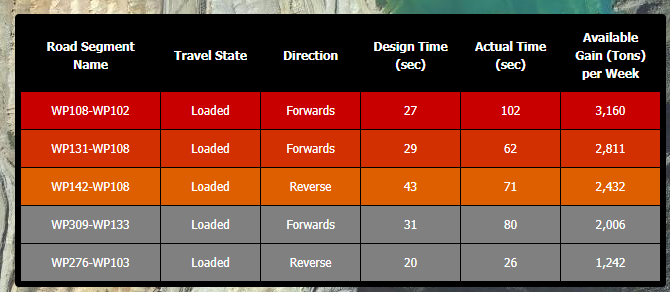
How HRE Expedited the Investigation:
Haul Road Explorer (HRE) was used to gather data on vehicle movements, speeds, and operator behaviour at the intersection. This data was analysed to identify patterns and potential contributing factors to the lack of safety and efficiency.
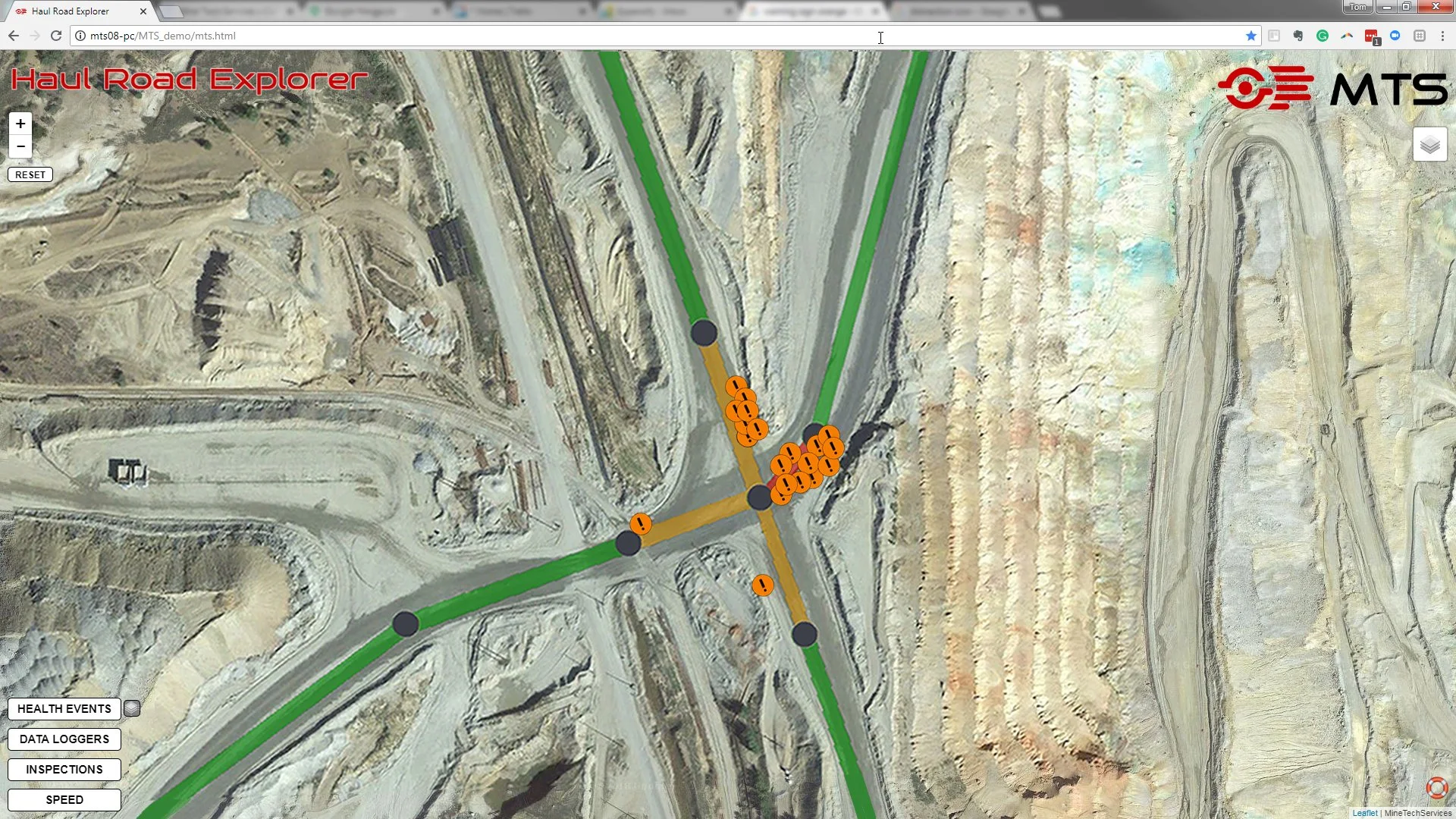
At a Glance Findings:
By opening HRE and utilising the Road Speed and Distraction features the site was able to identify:
High-density Distraction events clustering on a specific corner of an intersection. Approximately 60% of all distraction events were found here.
Significantly reduced truck speeds on the intersection and a significant loss of production as a result. HRE was able to highlight an approximate 8,400 Tons/week loss on this junction alone.
Further Investigation
The site wished to get a better understanding of the root causes behind these initial findings and conducted further analysis, again utilising the available tools within software. They found:
High traffic volume: The intersection was experiencing heavy traffic, increasing the likelihood of accidents. This was also contributing to the significant production loss.
No direct correlation between specific operators and trucks: This highlighted site constraint issues rather than incorrect operating techniques.
Road surfaces in good condition: After analysis of road condition-based health alarms, the site ruled out that poor road surface quality was the source of the issues.
Frequent near-misses and collisions: identified a significant number of incidents where vehicles failed to yield, leading to near-miss collision events.
Limited visibility: The presence of high berms and other obstructions limited the visibility for drivers, making it difficult to assess situations and react appropriately. By using the built-in inspection tool, they were able to plot on-the-ground imagery of the junction, aiding in the visibility of the issue.

Distraction events clustered on one corner of the junction (left), the exact spot photographed on the ground (right), where a raised berm blocks the sightline drivers need.
Root Cause Analysis
Based on the data collected through HRE, the root cause of the distraction events was identified as poor visibility at the intersection due to the height of one specific berm, obstructing visibility. Furthermore, it was unclear who had the right of way at the intersection. As a result, this led to confusion among operators, who would often creep into the intersection triggering distraction events.
Corrective Actions
To address these issues, the following corrective actions were implemented:
Berm reduction: The height of the berms was significantly reduced to improve visibility across the junction roads.
Right-of-way signage: Clear and prominent signage was installed to guide traffic flow and help prevent confusion.
The Results
The implementation of the corrective actions led to a significant reduction in distraction events at the intersection. Traffic flow improved, and the overall safety of the area was enhanced.
Key Performance Indicators
Using HRE, the site was able to measure the performance of the intersection following the corrective actions. The results were:
Production Gain: An additional 6000 Tons/Week through the intersection.
Distraction Event Reduction: A 48% reduction in distraction events.
Benefits of Using HRE
Rapid identification of root causes: HRE’s data analysis capabilities allowed for a quick and accurate identification of the underlying issues contributing to the distraction events.
Data-driven decision-making: The data collected through HRE provided a solid foundation for informed decision-making and the implementation of effective solutions.
Improved safety: The corrective actions implemented based on HRE’s findings resulted in a significant improvement in safety at the intersection.
Enhanced efficiency: By reducing the frequency of accidents and improving traffic flow, the overall efficiency of the mining operation was enhanced.
Summary
This case study demonstrates how the implementation of Haul Road Explorer can be a valuable tool for identifying and addressing safety issues in mining operations. By providing data-driven insights and facilitating a rapid root cause analysis, HRE can help improve safety, productivity, and overall operational efficiency.
Frequently Asked Questions
-
Look for where events cluster, not just how many there are. MTS used HRE's road speed and distraction features across the whole network and found that 60% of all distraction events were concentrated on a single corner of one junction. That concentration is what told the site where to spend its investigation time, rather than treating every intersection as equally suspect.
-
Infrastructure. The corrective actions were reducing the berm height to restore sightlines and installing clear right-of-way signage — nothing aimed at individual operators. That follows directly from the root cause: MTS had already ruled out any link between the events and specific operators or trucks, so training would have addressed a cause that wasn't there. Fix what's actually broken, and the number moves.
-
Not the traffic, and not the operators. At this USA mine, MTS found the root cause was a berm built too high, blocking sightlines across the junction, combined with unclear right-of-way — nobody was certain who should go first. Operators would creep into the intersection to see around the berm, and that creeping is what triggered the distraction events. Reduce the berm and fix the confusion, and the behaviour has no reason to continue.
