
Autonomous Haulage Stoppage Reduction
Type: Productivity
Location: Australia
Outcome:↑ 32% reduction in AHS-related stoppages, leading to improved productivity, reduced maintenance costs, and enhanced operational efficiency.
The Task
A mining operation was experiencing significant disruptions after its recent transition to an autonomous haulage system (AHS). Frequent stoppages due to various factors were hindering productivity and negatively impacting overall operations. To address these issues, the company implemented Haul Road Explorer (HRE) to help optimise its autonomous haulage systems and obtain the highest value possible.
Challenge
Following the transition from conventional to automated operational processes, the site was facing some issues with its new autonomous trucks. Due to the enhanced safety features and the lack of onboard human judgement, trucks would frequently stop across the site for a variety of reasons. For example, if a truck detected an object in the road, it would stop until it was cleared. A human driver would simply drive around the obstacle. This issue becomes particularly prevalent when perceived obstacles are identified to be vegetation, cables or wheel ruts, causing unnecessary and widespread stoppages.
It was important to better understand these stoppage events and gain deeper insight into them, in order to highlight their spatial distributions, resultant production losses and the areas of greatest concern.
Analysis
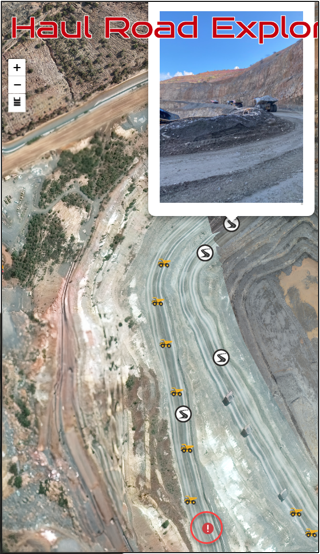
To address these issues, the site utilised Haul Road Explorer (HRE). It was incorporated to identify areas where obstacles were detected chronically, expanding bubbles, and other potential issues. By analysing data from various sources, including sensors, cameras, and communication networks, HRE provided valuable insights into the root causes of the AHS stoppages.
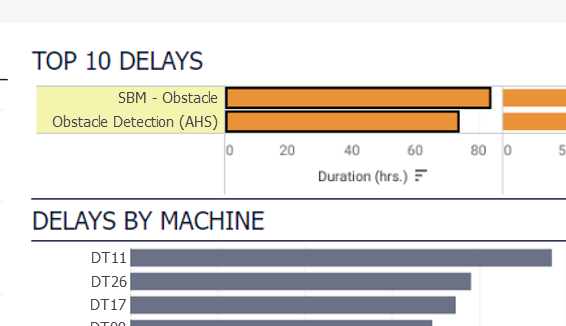
The initial analysis identified several key issues:
Perceived Obstacles: Trucks were frequently stopping due to perceived obstacles, such as overhanging rocks, loose materials, or communication coverage gaps. These false positives were leading to unnecessary downtime and reduced efficiency.
Communication Issues: Communication black spots were causing intersecting expanding bubbles, leading to AHS stoppages. Expanding bubbles are the last known zone of an AHS asset after communication loss. If another truck enters this zone it will automatically stop to avoid collision. This was particularly problematic in areas with complex terrain or dense vegetation.
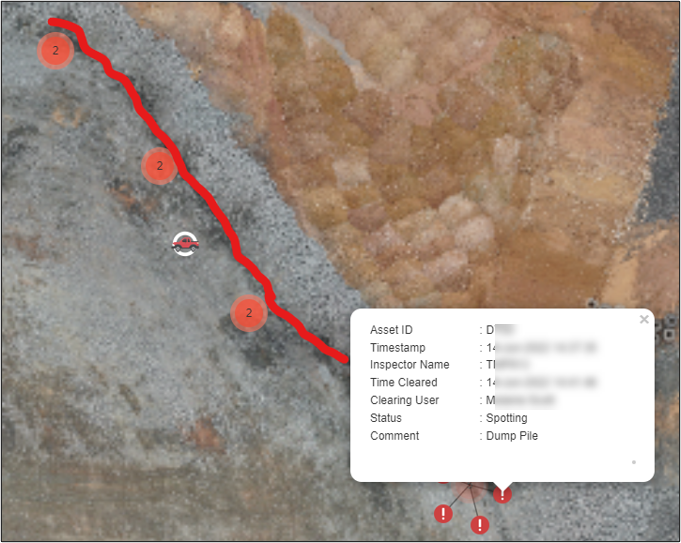
HRE Obstacles Cluster Of Events
Operator Behaviour: Overloading by some operators was contributing to spillage and stoppages, creating additional challenges for the AHS.
Road Conditions: Ruts and uneven terrain were causing issues for the fleet, leading to increased maintenance costs and reduced vehicle lifespan. HRE was also able to determine the knock-on impact of stoppages, enabling the quantification of the impact on production. This provided insight into which areas/stoppage types contributed to the highest production loss and where increased monitoring should be employed.
Infrastructure Limitations: Cable bridges were triggering object detection, leading to false alarms and stoppages. Additionally, dump cells were too close, resulting in sloughed material impacting subsequent dumps.
The Solution
Key Findings and Actions
HRE’s analysis revealed several critical areas for improvement:
Infrastructure Optimisation: Communication black spots were identified and addressed by repositioning infrastructure and installing additional repeaters. Cable bridges were modified to prevent object detection issues including some problematic cables being buried, ultimately reducing false alarms.
Operational Adjustments: Operators were trained on best practices for loading and avoiding spillage. It also facilitates the identification of repeat offenders, allowing for ongoing targeted training. This helped to reduce the number of stoppages caused by material obstructions.
Road Improvements: Problematic areas with ruts were quickly identified, and efforts were made to re-engineer the roads where possible. This involved levelling the terrain, repairing potholes, and improving drainage.
Fleet Support: Increased support was provided to trucks operating in challenging areas, such as corners with ruts or steep inclines.
Reaction Time Analysis: The site reviewed reaction times to clear obstacles, to identify areas for improvement in monitoring and response. This led to the implementation of more efficient procedures for clearing obstructions and minimising downtime.
Dump Cell Improvements: Dumping cells were identified to be too close together. Dumped material would slough into travel routes, confusing the autonomous systems for following dumps. The design process was refined to mitigate this issue.
The Results
The implementation of HRE and root cause identification resulted in a significant reduction in AHS-related stoppages. More specifically, the site achieved a 32% reduction in stoppages, leading to improved productivity, reduced maintenance costs, and increased overall operational efficiency.
Summary
By leveraging Haul Road Explorer, the mining operation was able to effectively identify and address the root causes of AHS stoppages. The implementation of targeted solutions led to a substantial improvement in operational efficiency and productivity. This case study demonstrates the power of data-driven insights in optimising autonomous haulage systems, ensuring uninterrupted operations and heightened maturity of the new system.
Frequently Asked Questions
-
Because it has no judgement to apply, only rules. A human operator sees a loose rock or a wheel rut and decides it's safe to steer around. An autonomous truck has no such discretion — if its sensors detect an object in the road, it stops until the object is cleared, whatever the object actually is. At this Australian site, that meant trucks were stopping for vegetation, cables and wheel ruts as often as for anything genuinely dangerous.
-
It's the safety zone drawn around an autonomous truck's last known position after it loses communication. Once a truck drops off the network, the system can no longer be certain where it is, so it protects a growing area around that last point — and any other truck entering that zone stops automatically to avoid a collision. At this site, communication black spots in areas of complex terrain were triggering these bubbles regularly, stopping trucks that were never anywhere near the original truck.
-
No — none of the fixes touched what the system treats as dangerous. MTS repositioned infrastructure and added repeaters to close the communication black spots causing false expanding bubbles, modified and buried cable bridges that were triggering object detection, and re-engineered roads with ruts. Every fix removed a false trigger. The trucks still stop for real obstacles exactly as before.
-
Yes, indirectly. Overloading by some operators was causing spillage on the haul roads, and that spilled material was enough to trigger the same object-detection stops as any other obstacle. The fix wasn't automation — it was training the operators responsible, including identifying repeat offenders for targeted follow-up. Autonomous trucks remove the driver from the cab, not the effect of how the truck was loaded before it left.
