Kazakhstan’s Mining Modernisation continues: Our Key Takeaways from MINEX 2026
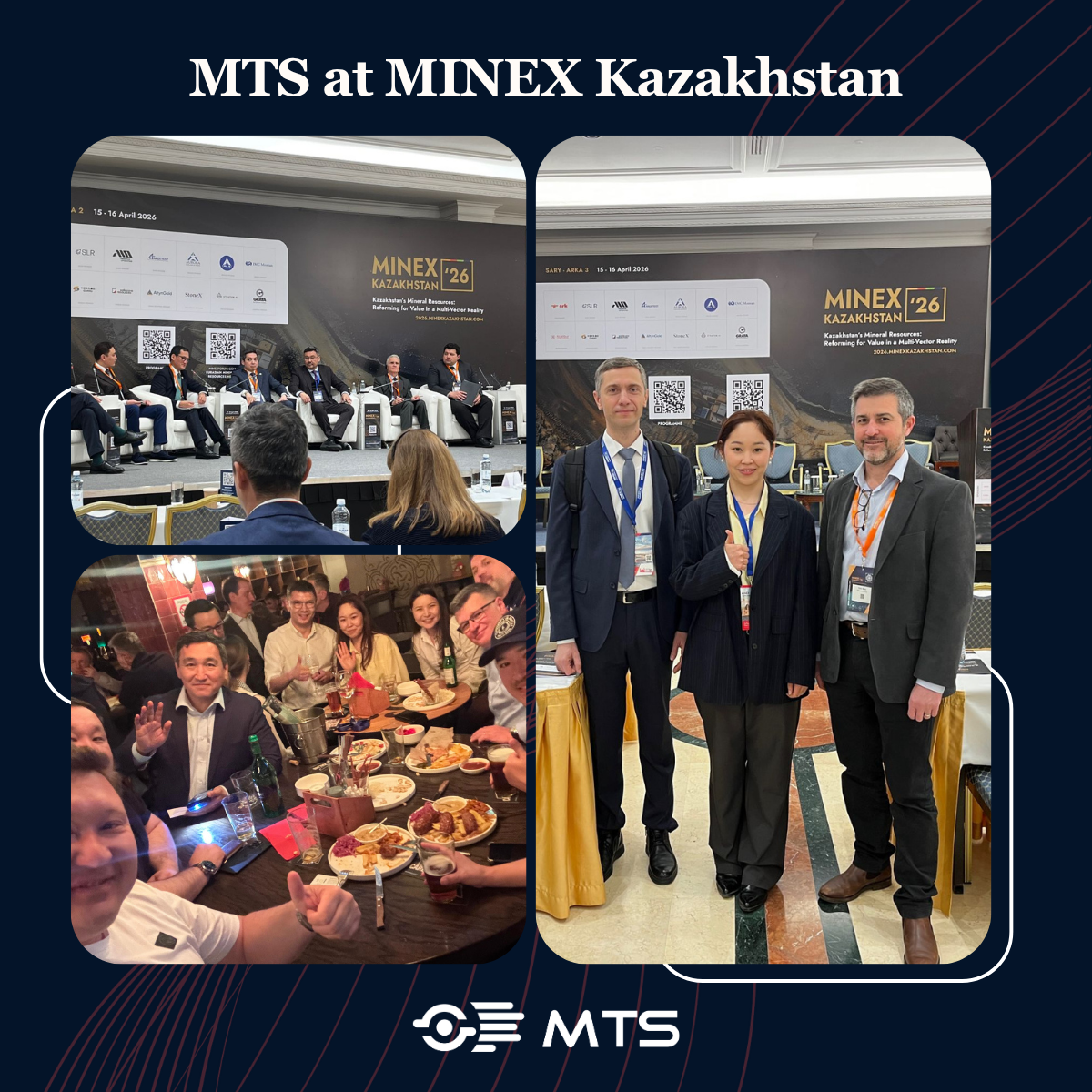
MINEX 2026 highlighted a mining sector that is ambitious, increasingly visible on the global stage, and actively trying to bridge the gap between potential and execution. Across conversations with operators, consultants, and technology providers, three themes stood out.
In this article
Kazakhstan as a Critical Minerals Hub
Government Support and the Move Toward Efficiency
The Human Element: Bridging the Skills Gap
Conclusion
1. Kazakhstan as a Critical Minerals Hub
Kazakhstan is rapidly positioning itself as a strategic hub for critical minerals, and this is not going unnoticed by global investors. The country's appeal is built on a compelling foundation: it is not simply resource-rich in general terms, it is specifically rich in the minerals the world needs most right now.
The diplomatic groundwork is accelerating in parallel. In February 2026, Kazakhstan and the UK deepened their strategic partnership with a direct focus on critical minerals supply chains. Of the 36 minerals designated as strategically important by the UK, 22 are produced in Kazakhstan, a statistic that underscores exactly why international interest in the region is accelerating.
That interest is translating into real investment. Endeavour Mining has committed to an ambitious five-year exploration push, and as part of a separate strategic move, East Star Resources secured a £1.8 million strategic investment from Endeavour, including a convertible loan note, to support gold and copper exploration in Kazakhstan. This backing from a major international miner is a clear signal of the region's recognised potential. Global majors like Rio Tinto and Endeavour Mining are showing increasing interest in the region, alongside strong engagement from Chinese investors.
However, much of the domestic mining sector, particularly junior and mid-tier players, is still operating with legacy, post-Soviet approaches to mining practices, limited use of modern mining technology, and a lack of high-quality data for real-time decision making (SIC). This mining approach is often characterised by fragmentation, a lack of standardisation, and an absence of the clarity and maturity that international partners expect.
The ambition to be a global hub is there. Now, the task is to ensure the people, processes and infrastructure on the ground can support that weight. At MINEX 2026, it was a pleasure to discuss these challenges and opportunities with our partners and colleagues. We look forward to continuing to work in this ambitious and upcoming region as we progress through 2026.
2. Government Support and the Move Toward Efficiency
The government's "Multi-Vector" strategy means the door is open to everyone from the West to the East. For a mining tech specialist, this means we are seeing a melting pot of different equipment and software on a single site.
The challenge for 2026 isn't just "getting tech," but integration. How do you make a fleet from one country talk to a dispatch system from another? That is where the real work happens.
"When a mine site operates with a mix of Western, Chinese, and local equipment, data often gets stuck in silos. One department sees the fuel consumption, another sees the payload, but nobody sees the whole picture."
We see this "melting pot" of technology as both an opportunity and a risk. When a mine site operates with a mix of Western, Chinese, and local equipment, data often gets stuck in "silos." One department sees the fuel consumption, another sees the payload, but nobody sees the whole picture. The upside to all of this is that mines are increasingly squeezing multiple vendors, which is driving innovation and new startups. Integration challenges can be overcome with a clear strategy for process, systems maintenance, data standardisation, and integrated reporting.
Our approach at MTS is not to replace existing equipment, but to connect it, creating integrated reporting that gives operations a complete, accurate picture of performance.
3. The Human Element: Bridging the Skills Gap
Perhaps the most important theme and the one that underpins everything else is the workforce. Mining companies across Kazakhstan are showing strong enthusiasm to bring in international expertise, but with a clear objective: to build their own internal capability.
However, building that level of capability requires more than two-day training sessions. It requires working alongside teams, embedding knowledge into daily operations, and connecting technical tools with practical decision-making.
Our experience across global mining projects suggests that a 'capability' model is replacing the 'vendor' model. In this framework, the emphasis is less on delivering a finished report and more on ensuring site teams have the confidence to interpret data and adjust operations in real-time, ensuring that progress is sustained long after the initial implementation phase.
4. Conclusion
MINEX 2026 made it clear: the world is watching Kazakhstan. The interest from international investors is real, the government’s support is historic, and the technology is ready.
However, the gap between "potential" and "production" remains. At MTS, we are committed to helping our partners in the region navigate this transition.
Did you miss us at MINEX?
Reach out to the MTS team to discuss how we can help your site bridge the data gap and build lasting operational capability.